
 By
By For the last 12 months, there has been a passionate discussion on how lockdowns have negatively impacted the mental wellbeing of younger generations. Those who are supposed to be at the peak of their socialising have instead spent the majority of their time in isolation, waiting for the opportunity to live a normal life once again.
These scenarios have led to an alarming increase in young people who meet the criteria for having a diagnosed anxiety disorder or depression. With these illnesses becoming more commonplace in our society, it would make sense for popular culture to reflect this feeling. Films will be produced in the next two to three years that not only want to capitalise on the events of lockdown, but to give a platform to those who have suffered the most during this time.
However, this does not mean that films have never covered anxiety or depression before. If anything, it has been covered too much; the problem is that it is rarely shown accurately. How many times has a film presented the villain as a former psychiatric patient?
The following list of films (in no particular order) cover or present the themes of anxiety and depression in a much more sensitive and reflective manner, shining a light on the impact that these illnesses can have on one person’s entire life.
It’s a Wonderful Life
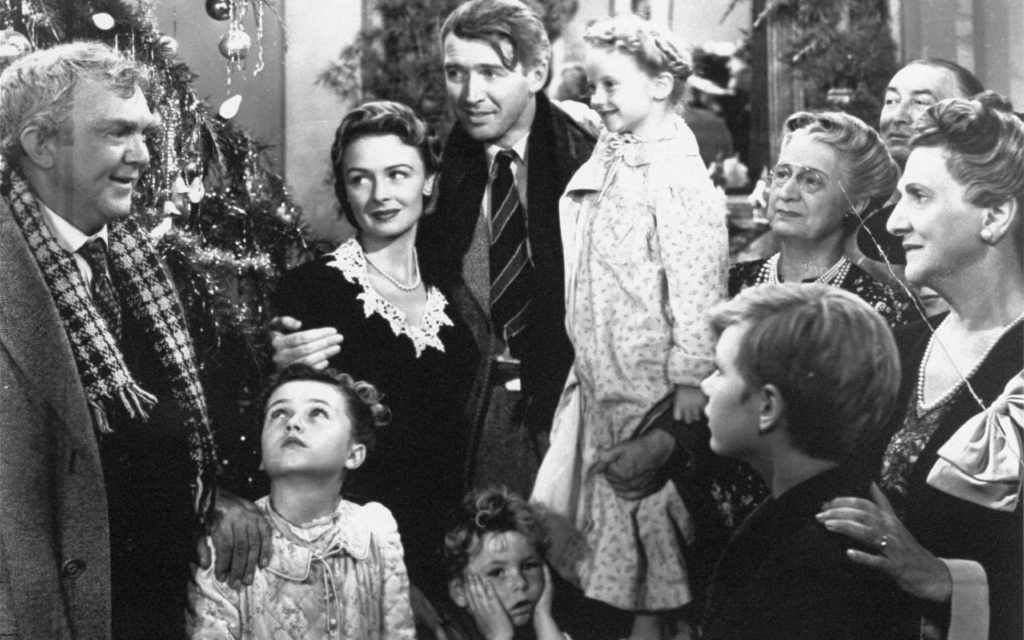
It’s a Wonderful Life is a universally recognised Christmas film that preaches joy and happiness through its emotionally powerful narrative. Yet many are quick to forget that the story centres around a suicidal man who has reached his lowest point.
James Stewart’s captivating performance as George Bailey encapsulates a man who feels he has lost everything. Trapped in his thoughts, he disconnects from the world around him, leading him to wanting to commit suicide on Christmas Eve. He’s interrupted by his guardian angel Clarence (Henry Travers), who shows Bailey an alternate reality where he was never born.
The film offers a truthful representation of a man who is not only in a depressive state of mind, but one who succumbs to the tunnel vision thought process that often inhabits the mindset of those at their most desperate, as George is unable to recollect nor understand the goodness he has spread during his life in Bedford Hills. Frank Capra’s iconic direction and script present a man that can only focus on the negative aspects of his life, unable to see past his shattered perspective not only of the world, but of himself too.
It’s a Wonderful Life is nothing short of a festive classic, but it is worth revisiting if you want a precise and sensitive representation of an individual who feels that they are alone in the world, even though they are very much loved.
The Babadook
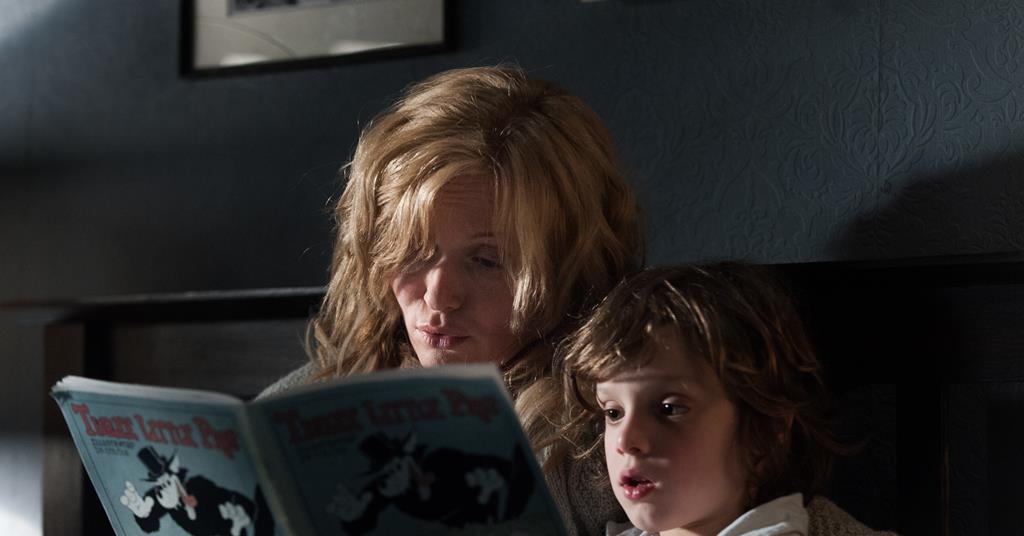
Jennifer Kent’s directorial debut, The Babadook, meditates on the stresses of single parenthood and the grief that occurs with losing a dearly beloved partner to conjure a truly terrifying experience. The film’s horror elements have been discussed endlessly, but the most powerful elements to get under the viewer’s skin revolve around Amelia’s (played by a sublime Essie Davis) decaying mental health as she tries to care for her troublesome son Samuel (Noah Wiseman).
Amelia’s loneliness becomes intertwined with Samuel’s disruptive behaviour, causing her to distance herself from friends and family – only resulting in more anger, impatience and frustration at her child. On top of this, her partner’s death begins to weigh over all of these proceedings as grief and suffering strangle Amelia’s mind. The way that Kent uses grief highlights how a lack of emotional support from others can lead to a deterioration in an individual’s wellbeing, leading to a state of depression as well as anxiety around the few connections that they have left.
The Babadook has made a name for itself for being one of the strongest horror movies of the last decade – but it’s not all jumps and scares. The metaphorical and well-conveyed narrative creates a stunningly realistic portrayal of those who are suffering from depression brought on by grief.
She Dies Tomorrow
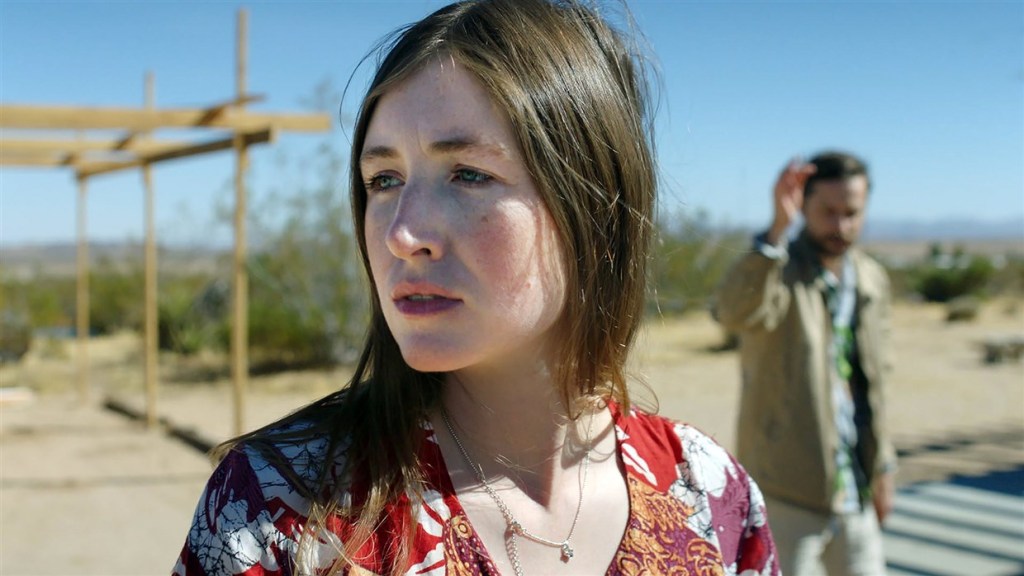
Amy Seimetz’s second directorial effort is one of the more challenging and experimental films on this list. Clocking in at just 85 minutes, the film follows Amy (Kate Lyn Shiel), a young woman who is convinced that she will die the next day. As she communicates these thoughts with her friends, their initially doubtful and dismissive stance changes to an existential mindset; they also start believing that they are living their last day.
The film never explains how this mentality started or what its overarching purpose is. Only a few strobe effects and ambient music choices are utilised to indicate this viral infection triggering inside all of its victims. The entire film’s focus is to emphasise how these irrational states of mind can appear within our lives so abruptly, yet still seem to linger. It reinforces how much of an impact existential anxiety can have on an individual throughout as characters often sit, unsure what to do, panicking and reflecting on all their regrets.
Paralysed by the fear that their lives were unfulfilled, the film conveys an honest representation on those who suffer from anxiety and their helplessness when an attack strikes. Whilst She Dies Tomorrow may not be everyone’s cup of tea due to its experimental nature, it is undeniable that the film achieves its primary goal. Seimetz wanted to show how anxiety creeps into the lives of many of us, leaving them changed and severely impacted once it settles in.
Eighth Grade

As previously mentioned, this lockdown has had a devastating impact on the mental health of teenagers – but that doesn’t mean that mental illness was not commonplace amongst this age group before the pandemic. Eighth Grade tells the story of Kayla (Elsie Fisher), an American middle school student who is desperate to be accepted within any social circle. What complicates this relatable motivation is the social anxiety which impacts her daily life.
Trips to a birthday party have a nerve-wracking tone that feels almost like a horror film. The deathly silences that seep into the story as Kayla quietly has a panic attack in a bathroom wrap the viewer into her terrified state of mind. Kayla tries to act calmly and casually in social situations, yet stumbles over her words – never quite sure on how to communicate clearly and correctly to those around her.
There are a lot of moments in the film that can be classed as cringe-inducing; completely and utterly awkward sequences devoid of smooth dialogue and comfortable scenarios to reflect the anxiousness of the adolescent years. Kayla’s almost religious usage of social media are the only moments of calm, reinforcing the idea that today’s generations are far too dependent on how they are perceived, rather than being comfortable with themselves.
Bo Burnham’s outstanding direction of genuine eighth graders is what sells the entire experience, adding a deserved air of authenticity to the proceedings as well as Anna Meredith’s loud electronic music, combining together to create an honest and unashamedly truthful look into anxiety within younger generations.
I’m Thinking of Ending Things

The under-appreciated Netflix original I’m Thinking of Ending Things from director Charlie Kaufman (writer of Adaptation and Eternal Sunshine of the Spotless Mind) is by far the most complicated film on this list. It refuses to shy away from an easy explanation, instead crafting an experience that is solely dedicated to jumping into the shoes of an individual suffering from a severe lack of fulfilment in their life.
The film follows a woman (Jessie Buckley) on a trip to visit the parents of her new boyfriend Jake (Jesse Plemons). It’s a simple concept, but one that is told unconventionally and experimentally. Long stretches of the film revolve around philosophical arguments, bizarre interactions between characters that initially make no sense, and a cartoon pig.
Without spoiling the plot of the film, the layers start to gradually peel away, revealing the true nature of the narrative that you’ve been watching – a tragic and deeply depressing character study that encapsulates the dreams and fears that follow people whenever they are left with their thoughts. It highlights how easy it is for an individual to lose their path in the world, drowning in their regrets, memories and knowledge instead of crafting a new path forward.
Punch-Drunk Love
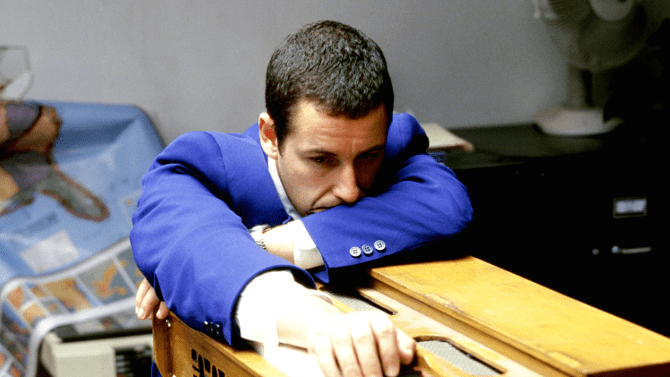
Adam Sandler is more than capable of turning out stellar performances – sometimes he just needs the right script. In Paul Thomas Anderson’s Punch-Drunk Love, Sandler plays Barry Egan, a man in his thirties who suffers from severe social anxiety. Egan falls in love with his sister’s co-worker Lena (Emily Watson) and must find a way to overcome his illness in order to spend time with her.
From the synopsis alone, you’d be forgiven for thinking this is your standard 2000s’ rom-com – but it’s the film’s keen focus on the psyche of Egan which separates it from its contemporaries. Many scenes show Egan quietly having an emotional breakdown, feeling lost, or unable to live a regular life. The comedy does not stem from this, however, as the viewer sympathises with Barry and laughs at the over-inflated egos of those that treat him unpleasantly.
What separates this representation of anxiety and depression from other films on this list is a strange balance of comedy and drama that effortlessly makes you laugh out loud, but never at the expense of Barry’s illness. It has this warm and comforting core to its premise that does not play the proverbial violin every time Barry gets sad – instead preaching a much more realistic message. Barry Egan may never improve with his mental illness, but there is nothing wrong with that in the slightest. As long as he keeps going and strives towards a positive goal, that’s all that matters.
Melancholia

Kirsten Dunst’s career highpoint in Melancholia often feels like two films mashed into one. The first half focuses on an anxiety-ridden wedding reception where Dunst’s character Justine has doubts about her marriage and enters into a depressive episode – throwing the ceremony into a whirlwind of chaos. The second half follows her sister Claire (Charlotte Gainsbourg), who struggles to care for Justine as the world succumbs to an apocalyptic disaster.
Melancholia takes its time to explore the psyche of both its central characters as the world around them is on the brink of destruction. The film highlights a common misconception that often comes with mental illness; moments that are expected to bring the individual great joy and happiness are fleeting. The emotions of helplessness and isolation can dominate the thought process without any restraint.
Yet, when director Lars Von Trier shows Justine at her almost catatonic state, barely able to move due to the extreme nature of her depressive episode, she shows much more calmness and acceptance than Claire when the world is ending. In an almost ironic fashion, Justine can cope much better when the rules of a normal life are thrown out of the window. The constant battles with her mental health have made her much more prepared to die in a world-ending scenario; she accepts her fate with much more ease.
Manchester by the Sea

The Oscar-winning film Manchester by the Sea explores the character of Lee Chandler (Casey Affleck), a depressed and lonely man who comes back to his childhood town to care for his nephew Patrick (Lucas Hedges) after the death of Lee’s brother. The film never explicitly states Lee’s mental health, but Affleck’s performance indicates a man who is constantly battling with his thoughts.
As the film continually peels back the layers on Lee’s tragic backstory, it is clear that Affleck is playing a mentally lost and unreachable man who has convinced himself that he will never be successful. It is far from an easy watch in this regard, as Kenneth Lonergan’s script places a lot of emphasis on how a tragedy in an individual’s life can impact their trajectory and overall mentality. Despite Lee’s tough appearance, he is still a very broken and distraught man who has not been able to move on from his past mistakes. His depression results in him being unable to commit to caring for the people around him in a meaningful manner, cutting an isolated figure in the grand scheme of things.
Manchester by the Sea is possibly the most realistic portrayal of mental illness on this list. It doesn’t shy away from the harsh, long-term impacts of mental illness, and Lonergan doesn’t use any dynamic styles or metaphors to symbolise mental illness in any way. All he uses is a powerful script and Affleck’s Oscar-winning performance to convey an individual’s state of mind without preaching anything. It is simply the insight into the life of one man.
Written By Tom Millett






1 comments on “8 Films That Present Anxiety and Depression Accurately”